Selling Well
Not staging — direction. Why the right calls before photography matter more than dressing every room, and what a $350 session actually changes about a sale.
Most vendors know their property could look better before it goes to market. The question is how much to do, what to spend it on, and where to stop.
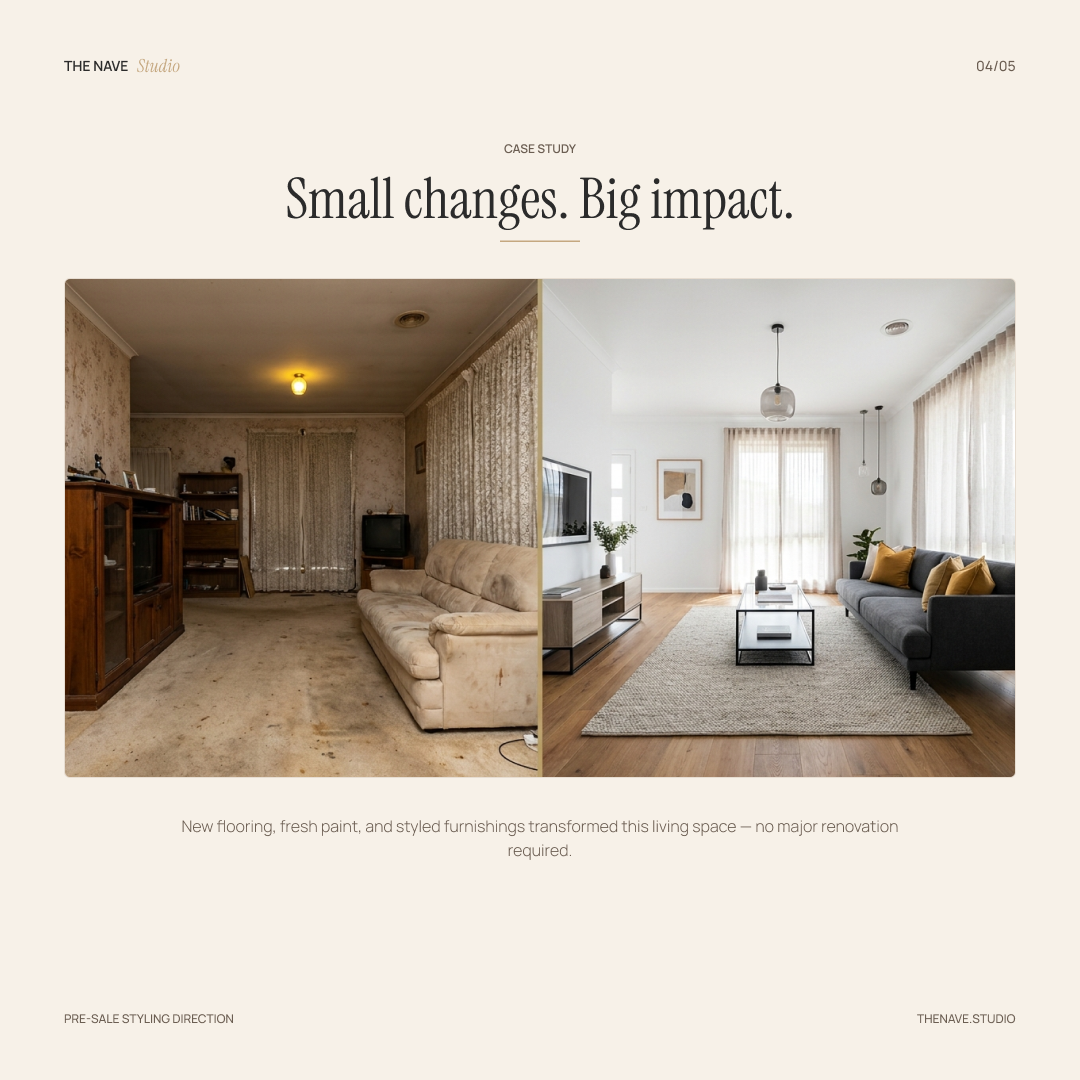
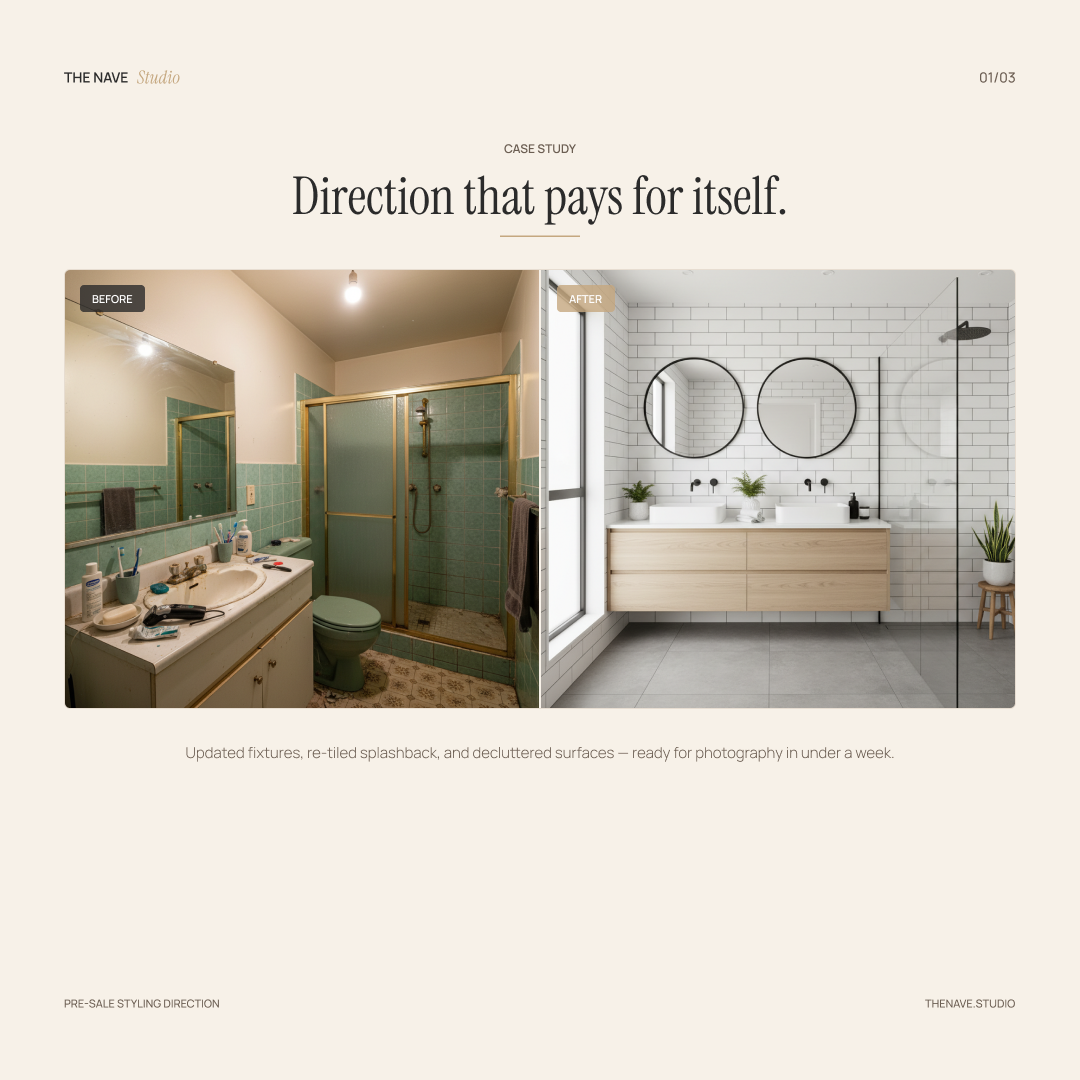
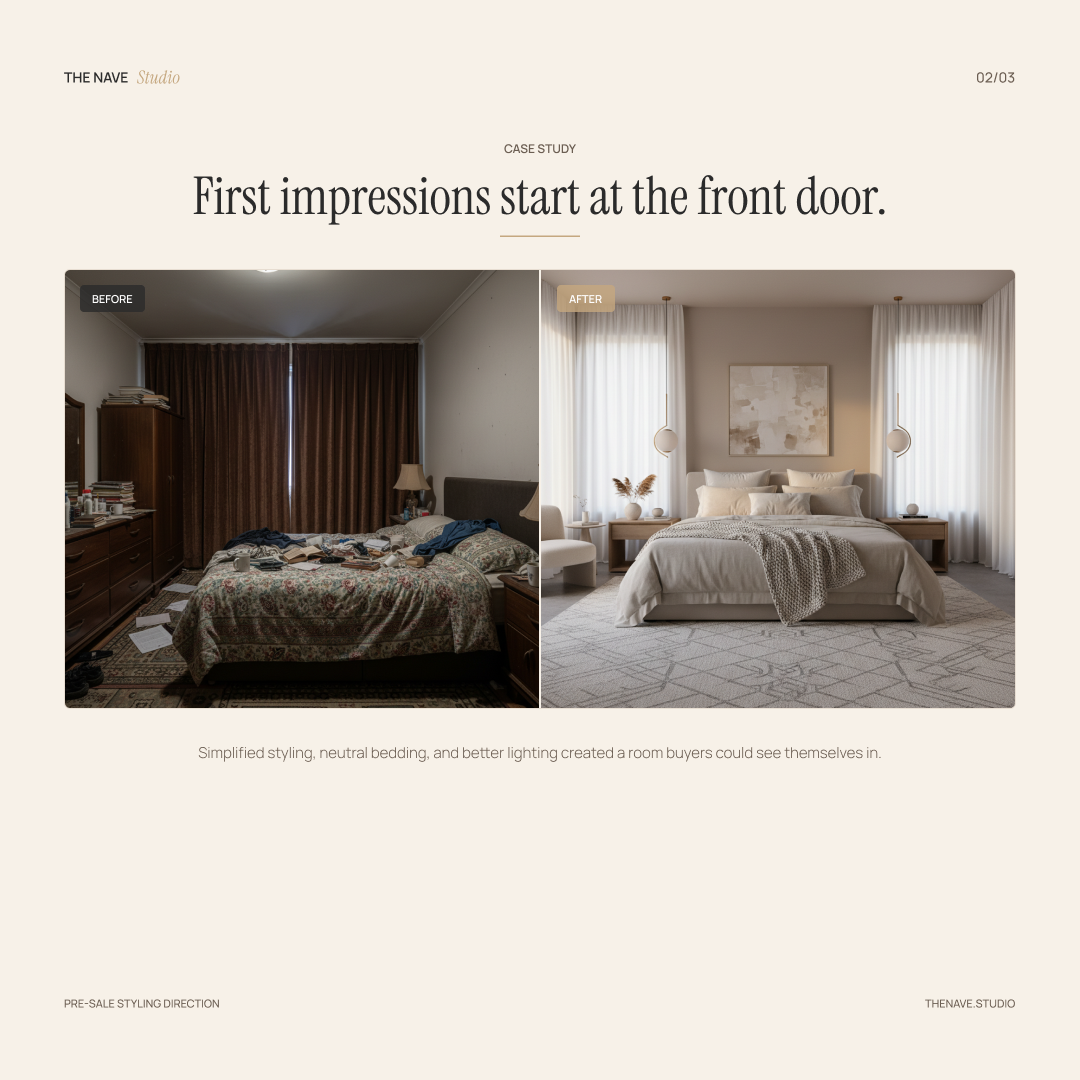
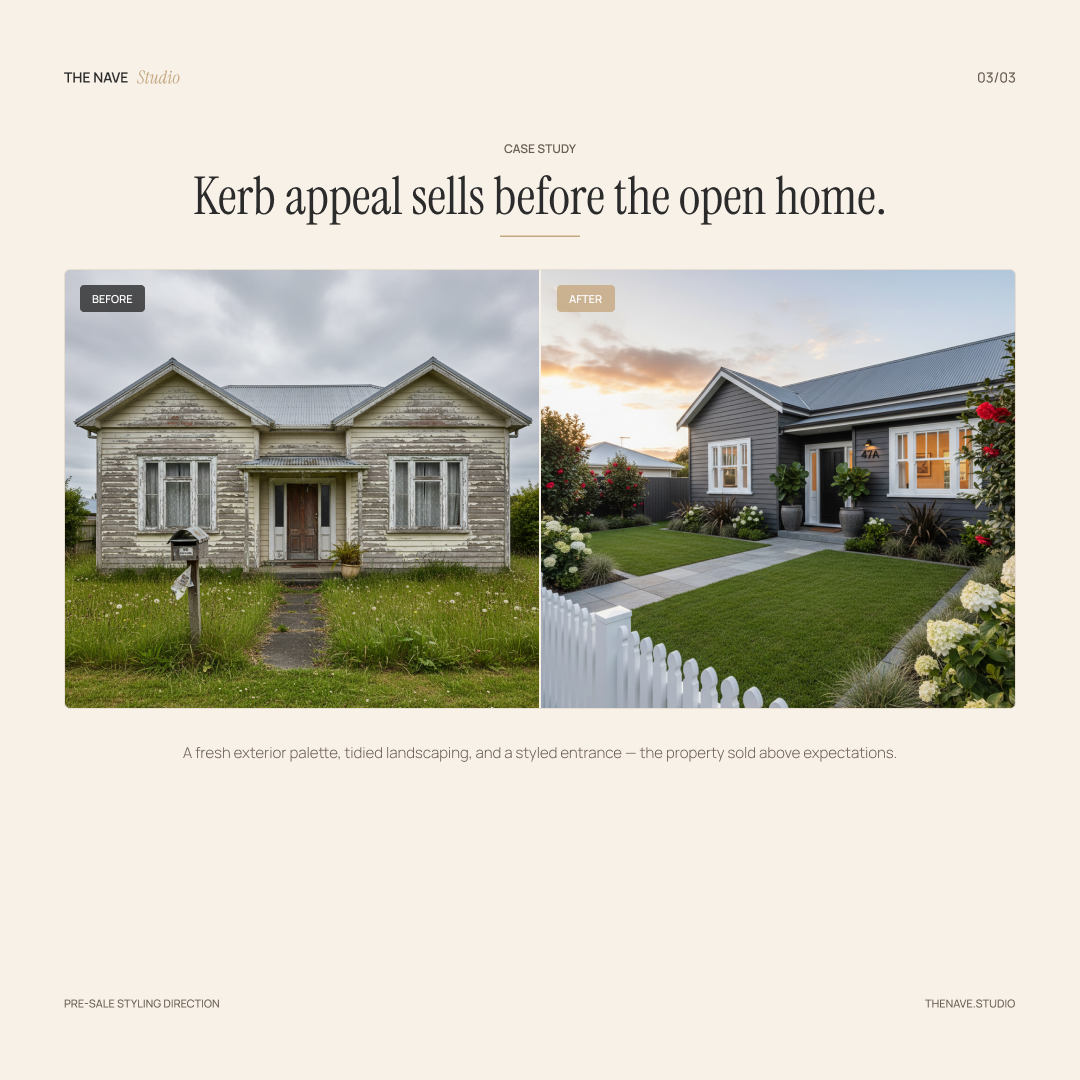
The default answer is staging — bring in rental furniture, dress every room, make it look like a show home. Sometimes that's the right call. But often, the money that goes into dressing a house top to bottom could be better spent on a handful of changes that genuinely shift how the property photographs and feels.
That's what pre-sale styling direction is. Not staging. Direction.
It works like this. I walk through the property with the vendor — room by room, for about an hour. We look at everything the camera will see, and everything a buyer will feel in the first ten seconds. Then I put it in writing, promptly: the colour calls, the small fixes worth doing, what to repair, what to replace, what to move out. A prioritised list — what's worth the spend, and what isn't.
The point isn't to make the house look like someone else lives there. It's to make the house look like the best version of itself.
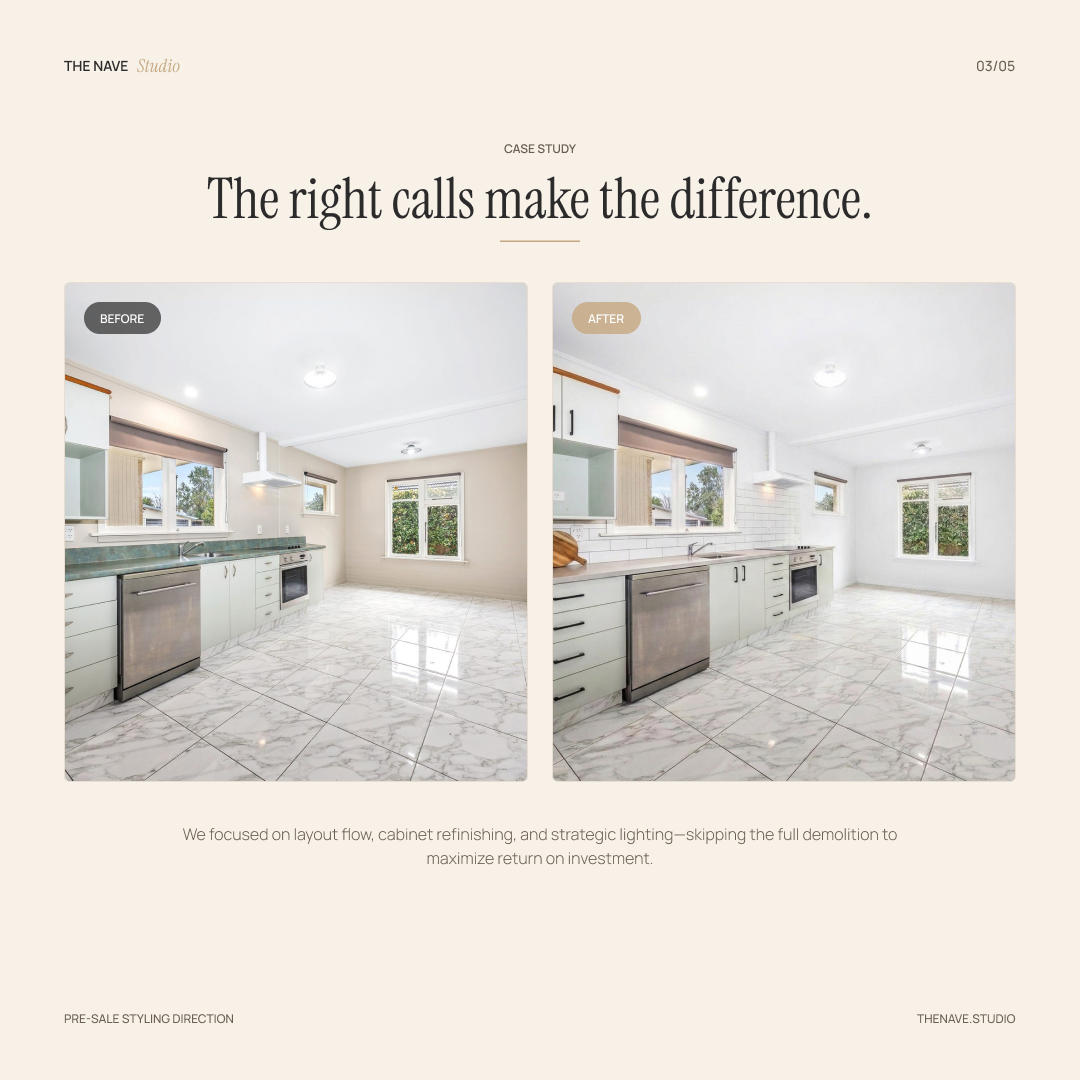
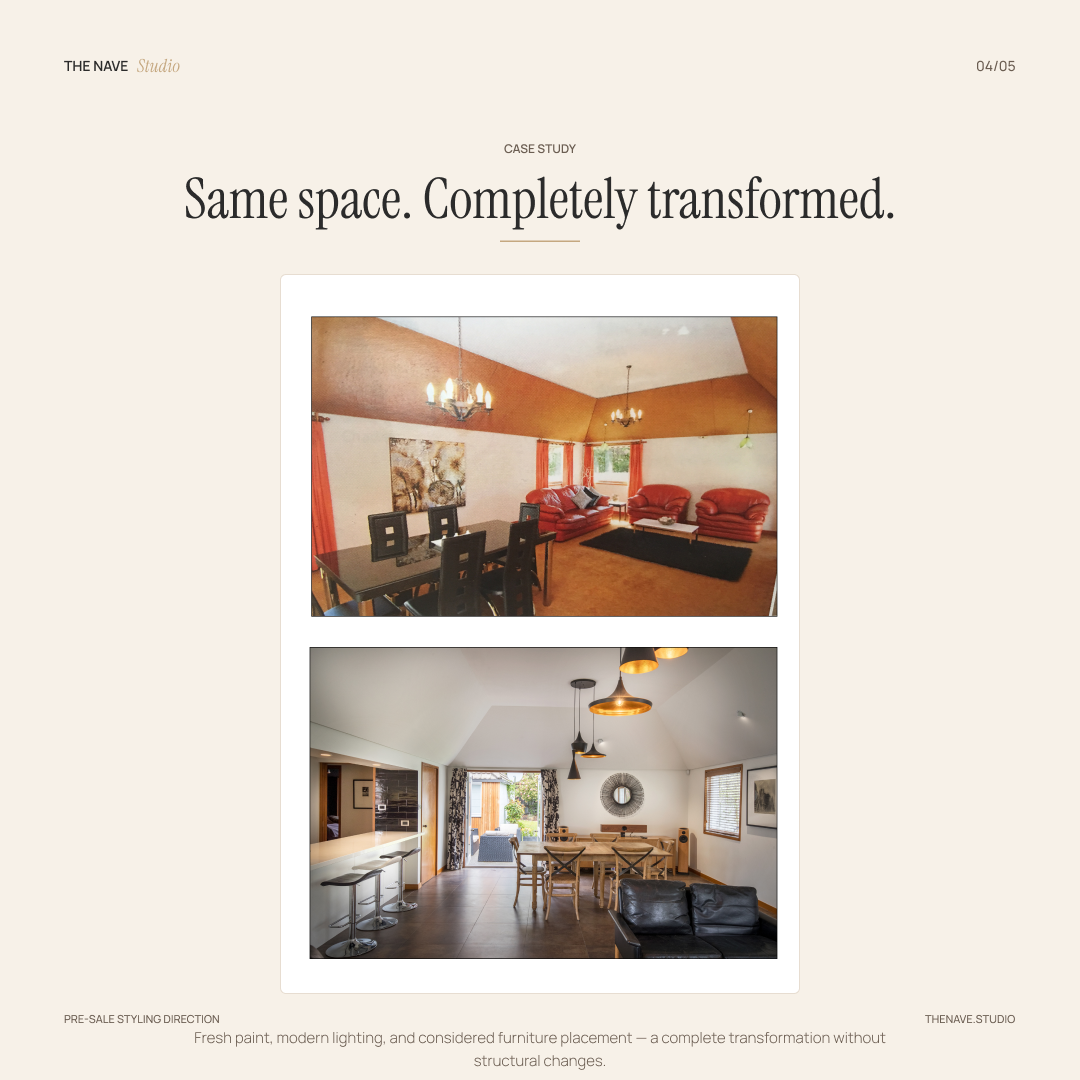
Some of it is obvious once you know to look. A wall colour that reads flat under photography. A light fitting that dates the room. A piece of furniture that's fine in life but crowds the frame. Things the vendor has stopped seeing because they live with them every day.
Some of it isn't obvious. The thing about selling a property is that the people who know it best are the least able to see it clearly. They know where the sun hits in the afternoon. They know the kitchen works better than it looks. A buyer walking in for the first time doesn't have any of that context. They have the photographs, and they have the first ten seconds of walking through the door.
The right calls, made early enough to matter — that's the whole service. Not a full styling package. Not a wish list. A fixed-fee session, $350, and a written report you can act on or hand straight to a tradesperson, delivered promptly so there's still time to act before photography.
The best time to do it is before the agent's photographer arrives. The second best time is before the listing goes live. After that, the photographs are done, the first impressions are set, and the direction comes too late to matter.
If you're preparing to sell, or you're working with a vendor who is, it's an hour that pays for itself — many times over — in the final sale price.