
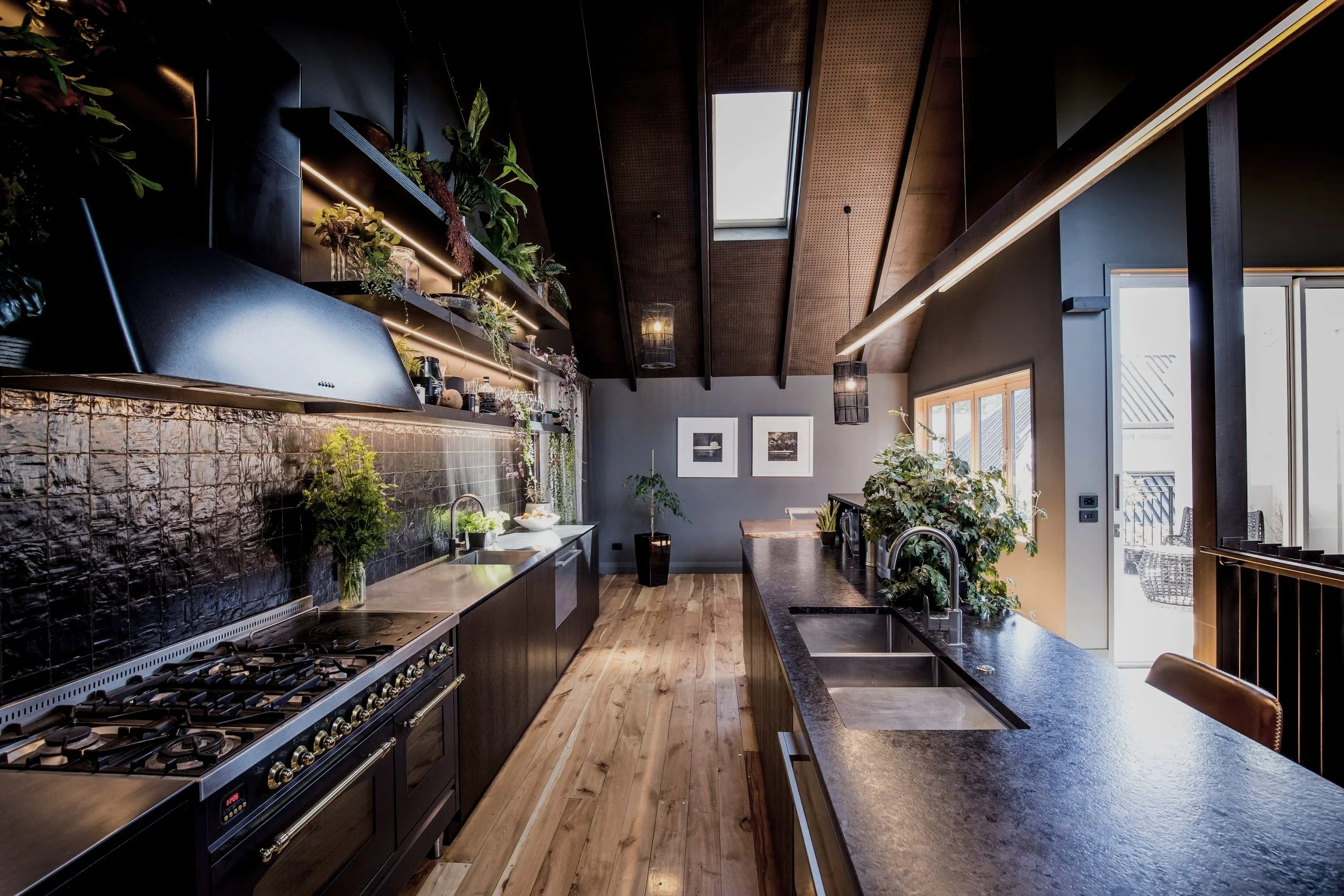
Oct 27, 2026 · @Jo
Most people start a new kitchen the same way. They visit a joinery showroom, meet a friendly in-house designer, and a few weeks later they have drawings, a quote, and a sense that the hard part is done.
It's an easy path, and for some kitchens it works well. But it skips a question that is worth asking before you commit tens of thousands of dollars to the most expensive room in your house: who is this design actually working for?
An independent kitchen designer answers to one person: you. Here's why that matters more than most homeowners realise.
Who is the designer working for?
A designer employed by a joinery company is often talented and genuinely helpful. But their job is to turn your enquiry into a job for that workshop. The design is part of the sale.
That shapes the advice you get, usually without anyone intending it to:
The kitchen is designed around what that workshop builds best, not necessarily what suits your home or the way you cook.
Materials come from their preferred suppliers, often because of trade pricing or habit.
Changes that reduce the job size are rarely suggested. Simpler doors, fewer drawers, or keeping your existing layout are not ideas that grow an invoice.
The drawings usually belong to the joiner. Many showrooms won't release them unless you build with them, so you can't easily take the design elsewhere.
An independent designer has nothing to sell you but the design. Our only interest is getting the kitchen right, at a price that makes sense for you.
One design, several quotes, a fair comparison
This is where independence pays for itself.
When each joiner designs their own version of your kitchen, you end up with three different kitchens and three different prices. One has soft-close drawers, another doesn't. One quotes a 20mm benchtop, another 40mm. One includes the scribe panels and installation, another leaves them as extras. You can't compare them, so you end up choosing on gut feel or the lowest headline number.
With an independent designer, you get one fully documented design: elevations, sections, a cabinetry layout and a written specification. That same set of drawings goes to two or three joiners, and every quote is for exactly the same kitchen.
Now the comparison is real:
You see who is genuinely competitive, not just who left something out.
Gaps and exclusions show up before you sign, not on the final invoice.
You can choose a joiner on workmanship, reliability and timing, because the price is like-for-like.
If a quote comes in over budget, we can adjust the specification and re-tender, rather than starting over.
The drawings are yours. You are free to build with whoever earns the job.
Materials chosen for your home, not one supplier's range
A showroom can only show you what it stocks. That's a narrow slice of what's available in New Zealand.
An independent designer works across the whole market: benchtops in stone, porcelain, timber, stainless or composite; cabinetry in real veneer, painted, laminate or thermally fused board; hardware, tapware, splashbacks and lighting from any supplier. We pick each one on its merits:
How it performs. How it handles heat, stains and daily wear, and how it ages. A beautiful benchtop that etches every time someone spills lemon juice is the wrong choice for a family kitchen.
What it costs. Where a premium finish is worth it, and where a well-chosen mid-range option looks just as good.
What you can get. Lead times and availability, so a hero material doesn't hold up the build.
How it feels in your light. We test samples in the room itself, at different times of day, before anything is ordered.
The result is a palette chosen for you, rather than a choice between the three finishes on the showroom wall.
Your kitchen is part of a whole house
A joinery designer's brief usually stops at the edge of the cabinetry. But your kitchen doesn't sit on its own. In most homes it's open to the dining and living areas, and it's the first thing you see when you walk in.
An independent interior designer looks at the whole picture:
Flow and layout. Where people gather, where the kids do homework, how the kitchen connects to the deck, the pantry and the laundry.
One continuous palette. The flooring, wall colours, timber tones and tapware in the kitchen relate to the rest of the house, so the space feels considered rather than inserted.
Lighting and electrical. Task lighting, pendants over the island, under-cabinet strips and power points are planned with the joinery, not squeezed in afterwards by the electrician.
Coordination with the build. Plumbing, ventilation, appliance specifications and wall linings are resolved on paper before the cabinets arrive.
Future rooms. If you plan to renovate the bathroom or living room later, decisions made now set you up for a cohesive house rather than a collection of separate projects.
The kitchen often sets the tone for the whole home. It's worth designing it with the whole home in mind.
Isn't the showroom design free?
It can look that way. In practice, in-house design time is usually built into the joinery price one way or another, and you pay for it whether the design is right for you or not.
An independent design fee is a known, upfront cost. What it buys:
Quotes you can genuinely compare, which often more than covers the fee.
Fewer variations during the build, because decisions are made and documented early.
Materials chosen for how you live, not what's in stock.
A kitchen that belongs to the rest of your home.
Drawings you own, and the freedom to choose your builder.
A kitchen is likely to be with you for twenty years or more. Getting independent advice at the start is a small part of the total spend, and the part that shapes everything else.
Thinking about a new kitchen?
Whether you're just collecting ideas or already have quotes on the table, we're happy to talk it through. There's no obligation: just a conversation about your home and what you'd like it to be.
Our starting design fees are published on our website, and you can get in touch at hello@thenave.studio whenever you're ready.
The Nave
Interior Design